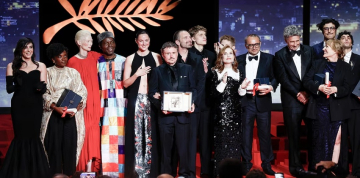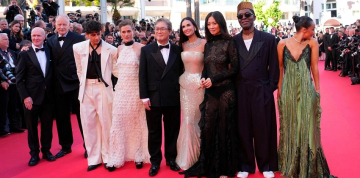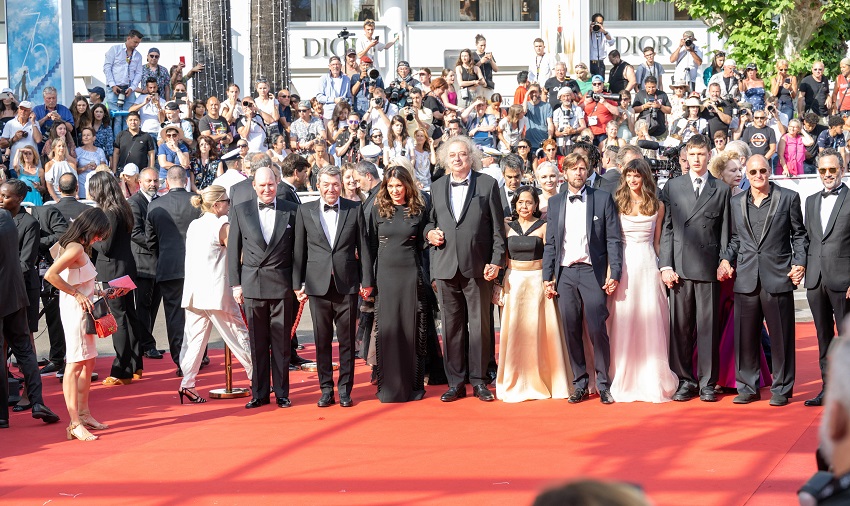
The 48-year-old Swedish director who has won the Palme d’Or twice, will now serve as the President of the Jury that decides this year’s winner of Cannes Film Festival
It’s not always easy to describe Ruben Ostlund’s films besides the fact that they are all satire. Plots are never straight forward as seemingly innocuous moments snowball into absurd grand finales. And sometimes there’s a literal snowball, like in his 2014 film, Force Majeure, where he was ambitious enough to task his crew to create the “best-looking” avalanche in movie history. However, the avalanche only serves as exposition for the central conflict of the film. The protagonist, a wealthy middle-aged man, suffers martial tension after prioritizing his own life over his wife and children’s when an avalanche narrowly misses their luxury resort. The story’s focus isn’t about the terrifying natural disaster, it’s about a man who exposes his true self to his family, for better or for worse. This is emblematic of Ruben Ostlund’s style – placing, more often than not, successful people are forced to drop their curated facades.
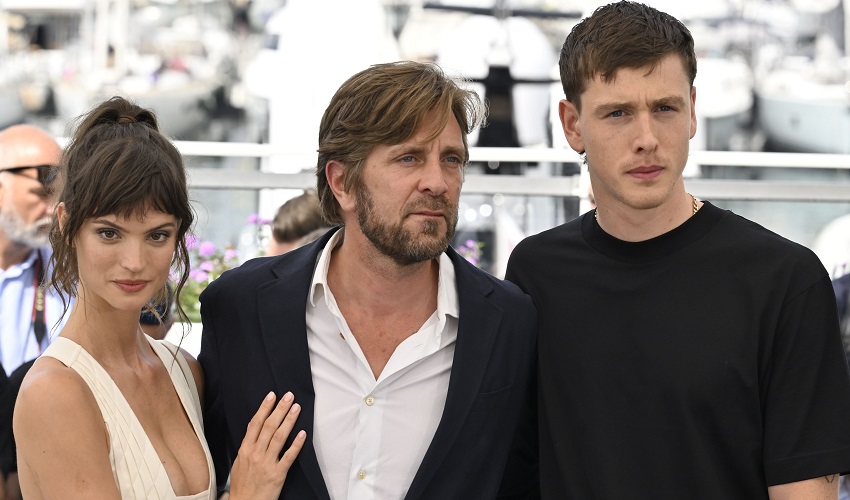
No matter what setting Ostlund places his films in, whether it’s a ski resort, a contemporary museum, a multi-million-dollar yacht, his characters speak plainly in a painfully realistic way. The contrast of grand backgrounds and simple intrapersonal issues, the director is constantly pushing boundaries and exposing the absurdity found everywhere in life, in both the exotic and mundane. The dialogues in his scripts are too brutally honest to be entirely made up, and in fact most of his dialogues are inspired, if not near perfect recreations of actual conversations he’s had with family, friends, and strangers. For example, in his most recent film (and winner of last year’s coveted Palme d’Or prize), the argument the young couple have over paying a dinner bill was lifted from a real argument with his then-girlfriend, now-wife. Perhaps it’s the simplicity of the script that fascinates the audience.
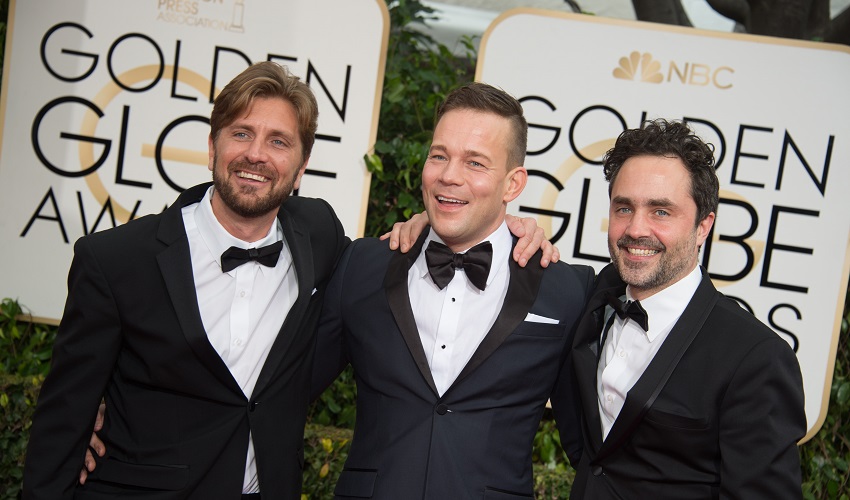
This kind of simple honesty has been a staple of Ostlund’s work since the very beginning, even when he was just shooting skiing and mountain biking videos of his friends in western Sweden during the 80s. Everything began when as a teenager, and his friend showed him a video on VHS for the first time. He was fascinated with the idea of being able to rewatch something over and over again. Combine that with the fact that he grew up on a Swedish archipelago with no cinema theater, you can imagine the ability to record video was a great alternative to simply watching whatever the television had on. With a VHS camera in hand, the first material he shot were conversations between friends and family, personal and intimate. While working as a ski instructor in high school, he was able to expand his “filmography.” In shooting these videos, he was always to get his friends to jump a little bit higher, jump a little bit longer, get the coolest possible angle of all the tricks.
He was so fascinated with the possibilities of the camera, that he decided to attend film school in Gotherburg. There, Ostlund continued to explore the relationships between people in his films, unafraid in his search for the truth. He filmed a documentary about his parents, who divorced when he was only four years old. He interviewed them both separately about the divorce and stitched the footage together, calling the film Family Again. Later, he admitted that when he watching other people’s films, he prefers to be challenged. He enjoys watching awkward social situations and so enjoys making movies about them.
His enjoyment for awkward situations is demonstrated in his 2017 film, The Square, which was his first Palme d’Or winner. Ostlund wanted to make an elegant movie, with visual and rhetorical devices to provoke and entertain viewers. The film follows Christian, the respected curator of a contemporary art museum, a divorced but devoted father of two daughters (just like Ostlund himself) who drives an electric car and supports good causes. His next show is “The Square”, an installation which invites passersby to altruism, reminding them of their role as responsible fellow human beings. But sometimes, it is difficult to live up to your own ideals: as soon as he loses his phone, he rapidly loses all sense of composure and human decency towards others. The film was inspired by a real art exhibition in Varnämo that tested visitor’s trust of others. The exhibition had two doors, one that said “I trust people” and another that said “I do not trust people.” Although most visitors chose to walk through the “I trust people” door, many of them hesitated to move forwarded when prompted to leave their cellphones and wallets on the floor.
The Square received critical acclaim in the US, receiving both a Golden Globes and Oscar nominations. Around this time is when I first met Ruben Ostlund in Los Angeles. Looking like an actor himself, as if Bradley Cooper spoke with a Swedish accent, he was very approachable and was very engaged in conversation, almost like a child. It was only later that I understood how careful one has to be when talking to him, as he is always observing others and gathering material for his next film.
As much as he talks about writing social satire for today’s world, he considered Force Majeure, The Square, and Triangle of Sadness as a trilogy about how to be a man in modern society. At the same time, he admits that class is such a big part of our society and it’s almost impossible to leave home without being confronted by the class system in some way. In his most recent film, Triangle of Sadness, which won his second Palme d’Or in Cannes last year, class tension becomes the centerpiece of conflict.
The film, like others such as The Menu and the television series The White Lotus, is a class-centered satire, clearly influenced by Oscar winner Parasite. Triangle of Sadness turns a more sympathetic eye to the ultra-rich, showing everyone, from the weapon dealers to the superyacht’s toilet attendants from a humanist perspective. While dealing with heavy, global themes the film is as entertaining as a roller coaster and best seen in a theater for an unforgettable experience. For all of the script’s absurdity, it’s all grounded in truth. Ostlund himself was once on a yacht that was hit by a storm, and he found it incredibly interesting how despite the amount of people getting sea sick, nobody wanted to break the social contract.
It’s no surprise that his upcoming film also deals with this idea of the social contract as well. Titled The Entertainment System is Down, the film takes place on a 15 hour flight where the entertainment system has stopped working and passengers, who are addicted in some way or another to the dopamine rush of scrolling through a screen, must deal with boredom. The plane’s pilot will be played by Woody Harrelson, who also played the captain of the unlucky yacht in Triangle of Sadness. It looked like the director and actor really got along during the shooting of the film.
After the film’s premiere at the Cannes Film Festival, Woody Harrelson at the film’s press conference noted that, “[Ostlund] can make you extremely uncomfortable. He can make you think. He can give you a sense of meaning and like there was a purpose to going to see the film. And at the same time, and perhaps more importantly, he makes you laugh throughout, which is quite a trick.”
Also present at the press conference was star Charlbi Dean, who shockingly passed away only three months after the premiere due to a bacterial resistant infection. In 2008, she suffered a car accident in which her spleen needed to be removed, weakening her immune system. Her portrayal of her character Yaya in Triangle of Sadness was critically acclaimed and considered a breakout performance. She was a model, just like her character in the film, and spoke intelligently on the film saying, “We do have a currency, whether it's our wealth or our beauty, or our influence or our power. And then, you're put into a situation where that currency is of no longer value. And then, who are you? What do you bring to the table? And will you be eaten first?”
This year the 76th Cannes Film Festival will take place from May 16 to May 27. Among the official selection are Ateroid City by Wes Anderson, Indiana Jones and the Dial of Destiny by James Mangold, Killers of the Flower Moon by Martin Scorsese and La Favorite by Maiwenn.
Ruben Östlund has therefore become the third two-time winner of the Palme d’Or to be the President of the Jury, following Francis Ford Coppola and Emir Kusturica, and the very first to take on this role the year after his acclaim in Cannes.
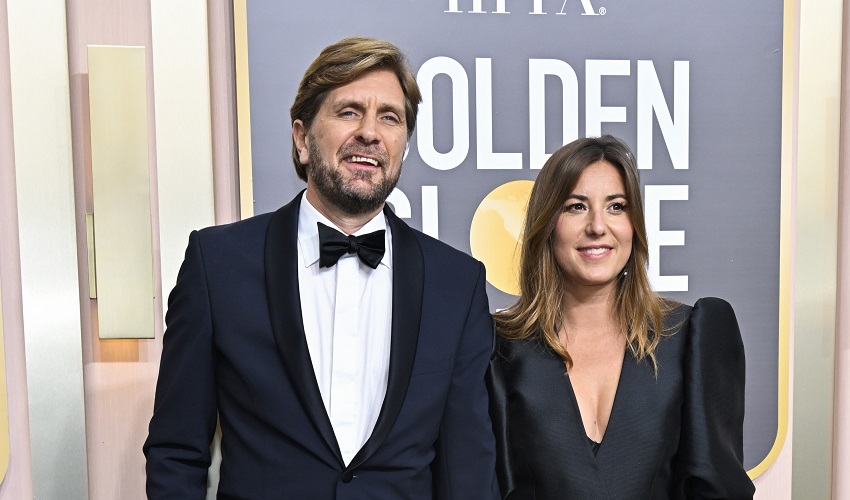
ABOUT HIS INFLUENCES
I love Kaurismäki and Roy Andersson. And I think Kaurismäki and Roy Andersson is very inspired of Tatti, Fattatti also. There's a certain kind of family with. What I love about them is also the simplicity of the situations and the comedy. It's not posing. It's very direct and it's very humanistic. I always feel there's a warm feeling of how they are treating all the characters and all the scenes, even though they did with horrible things sometimes, the scenes. No, I love them. I love them.
ABOUT MAKING FILMS IN ENGLISH
English is my second language. I would love to do a film in French or in German also, but English is my second language. And then, the films were also taking place in an environment where people speak English with each other. So, it was a natural step for me to make. And I was nervous about it because I didn't know if I would miss out on the nuances like that I can find in the Swedish language. But the actors took such a great responsibility also of the script, because as soon as there was something that I felt, they felt that it, mm, I wouldn't say it in that way, they could add things and change things and so on.
ABOUT NUMEROUS TAKES
What we do when we do a lot of takes is that first you try to find out exactly how to sculpt your decision. And it often gets better up to take 20, like, ah, it's getting better, it's getting better. Wow. Wow. And then somewhere, take 20, it's getting worse. So, it's like, oh, fuck no, it's no. Now it's not that good anymore. And then you fight and fight and fight to try to push up the level of the performance, and the intensity of the scene. And if you manage to do that, then you take a break. And then you say, when the actors come back on set, you say, okay, everybody five takes left, and then you do a countdown and like, okay, four takes left, come on now. And in the end, when you do the last three takes, then the whole team is gathering around the camera. Everybody's looking at the actors, giving them full attention. There's not allowed that someone is standing and scrolling, not giving them attention. And you try to put in some presence, like in that moment, it's like, it should be like a football game. And now we're going to win that football game together. And like, very often, it's the second last take or the last take that is used in the film. And now, in this film, I actually brought the Gong, gong, like bong. To the shooting.
ABOUT PREMIERING AT THE CANNES FILM FESTIVAL
It was so beautiful because people were applauding during like it was a football game someone told me. It was a football game going on. And when Dolly's character is taking over the control, they're like, "Yeah." (laughter) And this is the goal with the movies that we're going to make in the future. Also, we are combining the best part of the European cinema that is intellectual, that is trying to say something about society, with the best part of American cinema that is like, "Okay, if we don't make this film successful, we don't have any job anymore. And we can't support our children. And they can't go to college." These two kinds of pressure and really create cinema that makes it like, "Fucking, I want to go to the cinema."
Lena Basse,
Los Angeles,
2023